14Apr
Yes yes yes.
I fell at work and broke my wrist. The X ray at the emergency ward showed a stable but displaced fracture, and I underwent an internal reduction procedure under local anesthesia and general sedation, which went well.
The first days after the procedure I took a lot of pain relievers, including opioids when nothing else helped. But after the 10 first initial days, I tried not to take painkillers any more, cause I didn`t want to get dependent on them, but rather heal on my own.
It`s been two months now, and I`m back at work, but I still get those bouts of staggering pain in my wrist a couple of times a day, it doesn`t last longer than 2 minutes but it is exhausting.
What did I do wrong ?
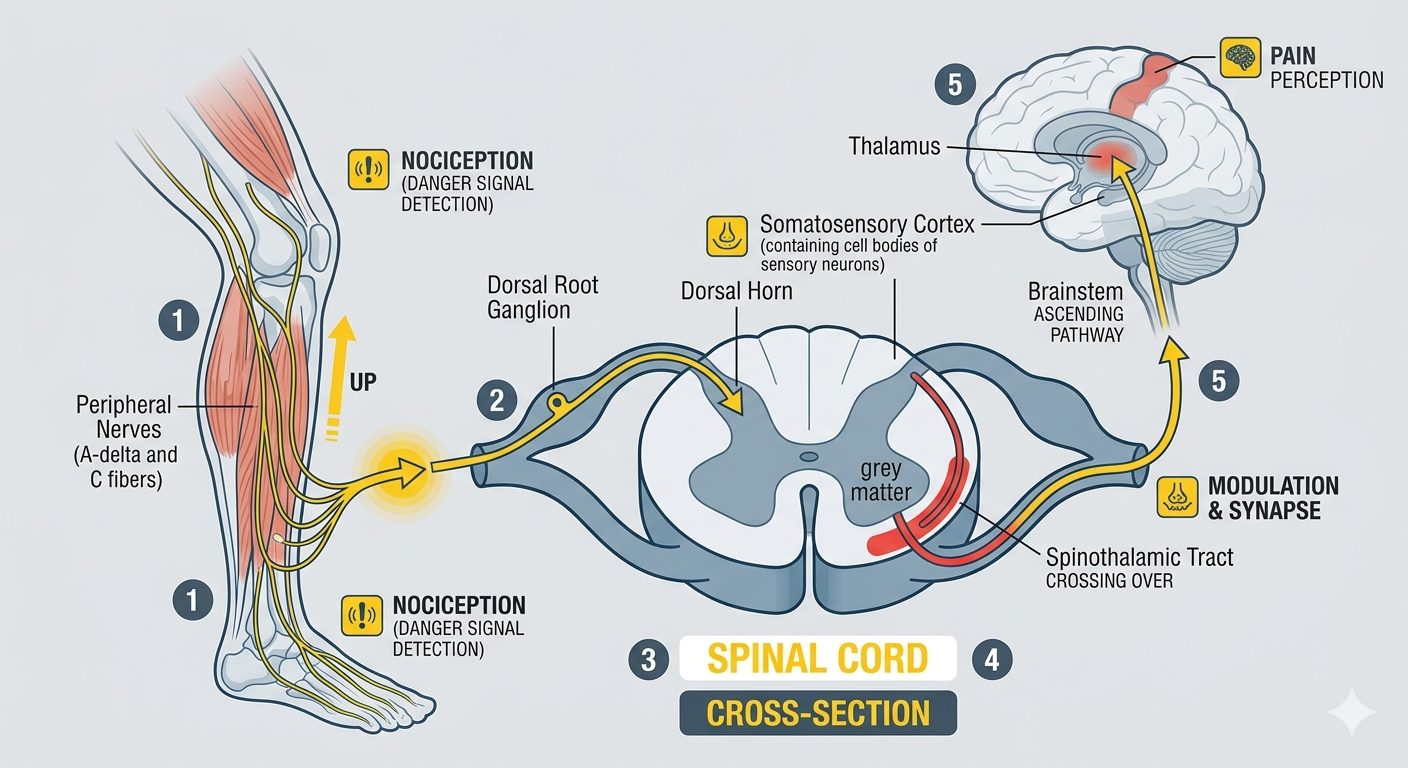
the normal pain pathways
Let`s put it simply, our body doesn`t like to be subject to painfull information for a long period, meaning weeks on. This will lead to a peripheral sensitisation, in other words the nervous system will look at the pain transmitted from my wrist under a magnifying glass and iterpret it as a real and important information, as if the bones and tissues involved didn`t heal yet. Just like in the first days after being wounded.
And if this goes on for weeks and months then we`ll see a central sensitisation on top of it, where our brain focuses too much on this incoming information.
What will happen in this sensitisation situation, for instance, is that if I just brushed my wrist against the wall then my brain will say ouch. It was just a touch but it will hurt like real.
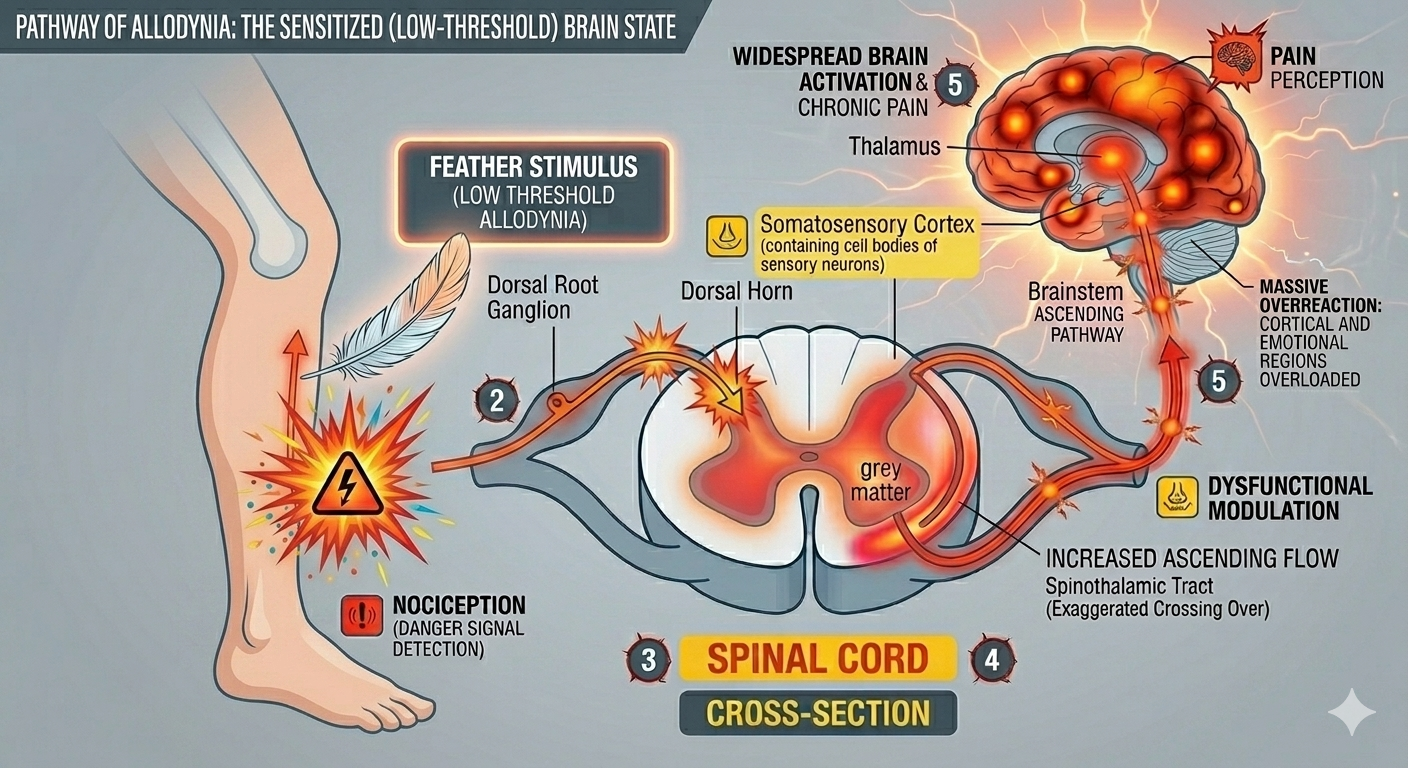
the sensitisation state. being touched by a feather will feel like a burn
In some cases it may turn into a real nightmare, like in CRPS, a complication we will address some time later.
If we don`t want this to happen, it would be wise to go on using painkillers regularly until this sensitisation, this overreacting will cease. There is no chance we will get dependent on pain relievers, even if it lasts months, unless we use opioids, which is a very bad idea anyway.
On the contrary, without regular painkillers use we will tend to perpetuate this sensitisation, this overeactive nervous system pattern.
So yes, you should use painkillers for pain thats lasts more than a couple of days.
If the pain bouts are infrequent, not on a daily basis, you can take tablets only as needed, it may be any pain reliever you are used to, except opioids.
But if the pain bouts are daily, then you have to ad at least one tablet in the morning and in the evening on a fixed basis, and take another sort as needed.
For instance, a Tylenol tablet at 8 a.m, but since I felt pain at 12 then I took an Advil tablet or a Codeine combo on top.
Physicians, pain specialists would call this regimen treating baseline pain and breaktrough pain as well. It is a concept that originated in palliative care for advanced cancer patients, the big difference is the use of opioids which is standard of care in oncology, but certainly not recommended for orthopedic pain, burns and so on.
You should go on with this pattern as long as needed, in some cases it will be only days, in other cases it might take months, until the frequency and intensity of your pains reside.
This is how you will win the battle and get rid of your persistent pains after wounds, burns, surgery and more.
This is also true for children, for pregnant or breastfeeding women, but you should consult your physician to build a personalised receipt.
Headaches are a special situation in which frequent pain reliever use is less recommended, and we will relate to them later on in a separate article.
Comments